One provider who knows your history, has time to listen, and stays with you as your health changes — in Denver, or by telehealth across Colorado and Connecticut.
That's the average primary care visit. It's not enough, and you already know it.
You repeat your whole history to someone who's never met you. The visit ends before you get to what actually worries you. Your symptoms get treated one at a time, by people who never talk. You leave with a prescription, but not with answers.
None of this means you're a difficult patient. It means the system was built for speed — not for knowing you.
Three things change when a provider actually has room to know you.
Unhurried visits with room to ask every question — and be heard on all of it.
A small panel, by design. The same provider every visit, connecting the dots over time.
Same- and next-day appointments, secure messaging, and care that's proactive.
Not a portal notification saying “normal.” I read your results in full — trends across time, not isolated snapshots — then walk you through what I see, what I'm watching, and what I'm still unsure about.
Your A1c and ApoB are where I want them and holding — that's real cardiometabolic progress, not a fluke. Inflammation is trending down but isn't there yet, and vitamin D is low enough to be contributing to how tired you've been. Those two are what we'll work on this year.
The same review structure is used across hormone panels, thyroid function, gut testing, and metabolic health.
I'd rather know a few hundred people deeply than thousands barely at all.
I spent years in a system that gave me fifteen minutes and told me to move faster. I watched patients fall through the cracks — not because anyone stopped caring, but because no one had time to see the whole person.
So I built something different. I keep my panel deliberately small, because I'd rather know a few hundred patients deeply than thousands barely at all.
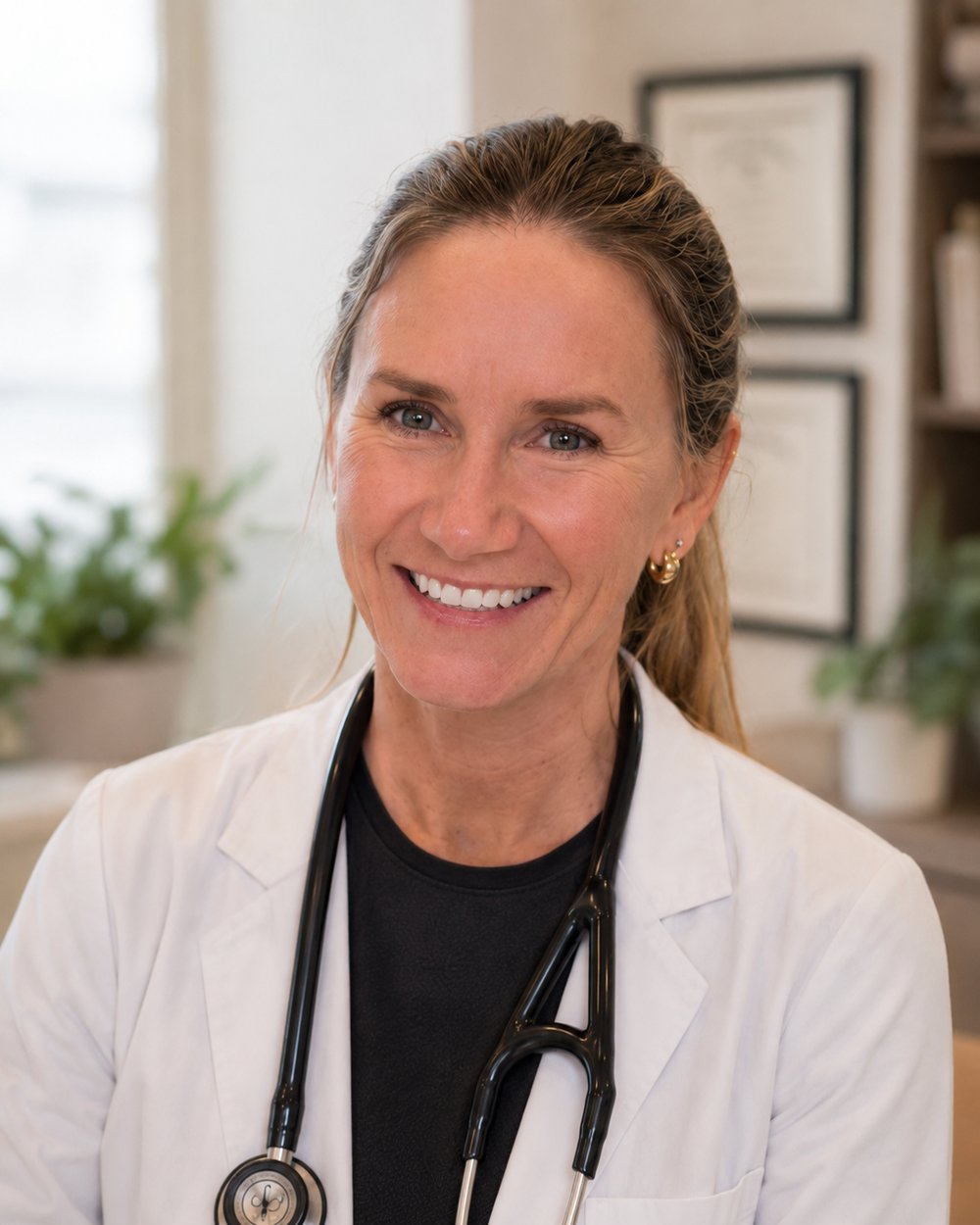
Natalie Ball, MPA, MSN, APRN, FNP-BC
Harvard University · University of Pennsylvania · Board-certified Family Nurse Practitioner
More about Natalie →
Same provider, same evidence-based medicine either way. The difference is how much time and access you have.
Membership includes primary and preventive care, same- and next-day sick visits, hormone and metabolic care such as HRT and GLP-1 when clinically appropriate, secure messaging, and care coordination. It is not health insurance.
One relationship, one flat fee. $150 one-time onboarding, waived for functional medicine graduates. HSA/FSA-eligible with itemized receipts.
Enroll within 30 days and your visit fee is credited toward membership.
No contracts · cancel anytime · 15-minute call, no commitment
A free 15-minute call, no commitment. Tell me what's going on and we'll find the right way to begin.
Book a Free Intro CallNo. Membership is a flat monthly fee for your ongoing relationship and care. Insurance is still billed separately for covered visits, labs, and imaging when applicable.
No. Single visits are available à la carte with no membership required. Membership is for patients who want an ongoing primary care relationship.
No — functional medicine programs are separate, structured offerings. Members receive preferred pricing, and many patients do both.
Yes. Care is available in person in Denver and by telehealth across Colorado and Connecticut.
Individual visits and services are HSA/FSA-eligible, and I provide itemized receipts. Whether the membership fee itself is eligible depends on your plan.
Integrative health insights, practice updates, and more.
Maia Affiliate